
The Principal Knowledge
Planning Bible Lessons for My Children

“First and chiefest is the knowledge of God, to be got at most directly through the Bible.” - Charlotte Mason Towards a Philosophy of Education, p. 254
“I have no greater joy than to hear that my children are walking in the truth.” That’s what John wrote in 3 John 1:4 as he was addressing the readers of his letter. And isn’t that the cry which should resound from every parent’s heart? We want to know how to ensure they’ll seek the Lord all their days. And we know we are powerless to make that happen. It is here that I must remind myself over and over again that it’s my job to work to be faithful, but He is the Lord of the harvest. We can’t control the outcome, but that doesn’t change how we work to faithfully plant the seeds. The Holy Spirit is the teacher. I can model. I can pray. I can spread a feast of ideas before my children. And I can remember that He is faithful to do abundantly more than we can ever ask or think.
Charlotte Mason called the knowledge of God the principal knowledge. In laying out the curriculum for children, she divided it into three categories: the Knowledge of God, the Knowledge of Man, and the Knowledge of the Universe. Now, of course Charlotte Mason also believed that the Holy Spirit is the teacher of all truth in every category and that all of our studies ultimately lead back to our Creator and Sustainer, but it is fitting that we begin discussing curriculum by speaking of the study of God Himself as He is revealed to us in His Word.
In Our Family
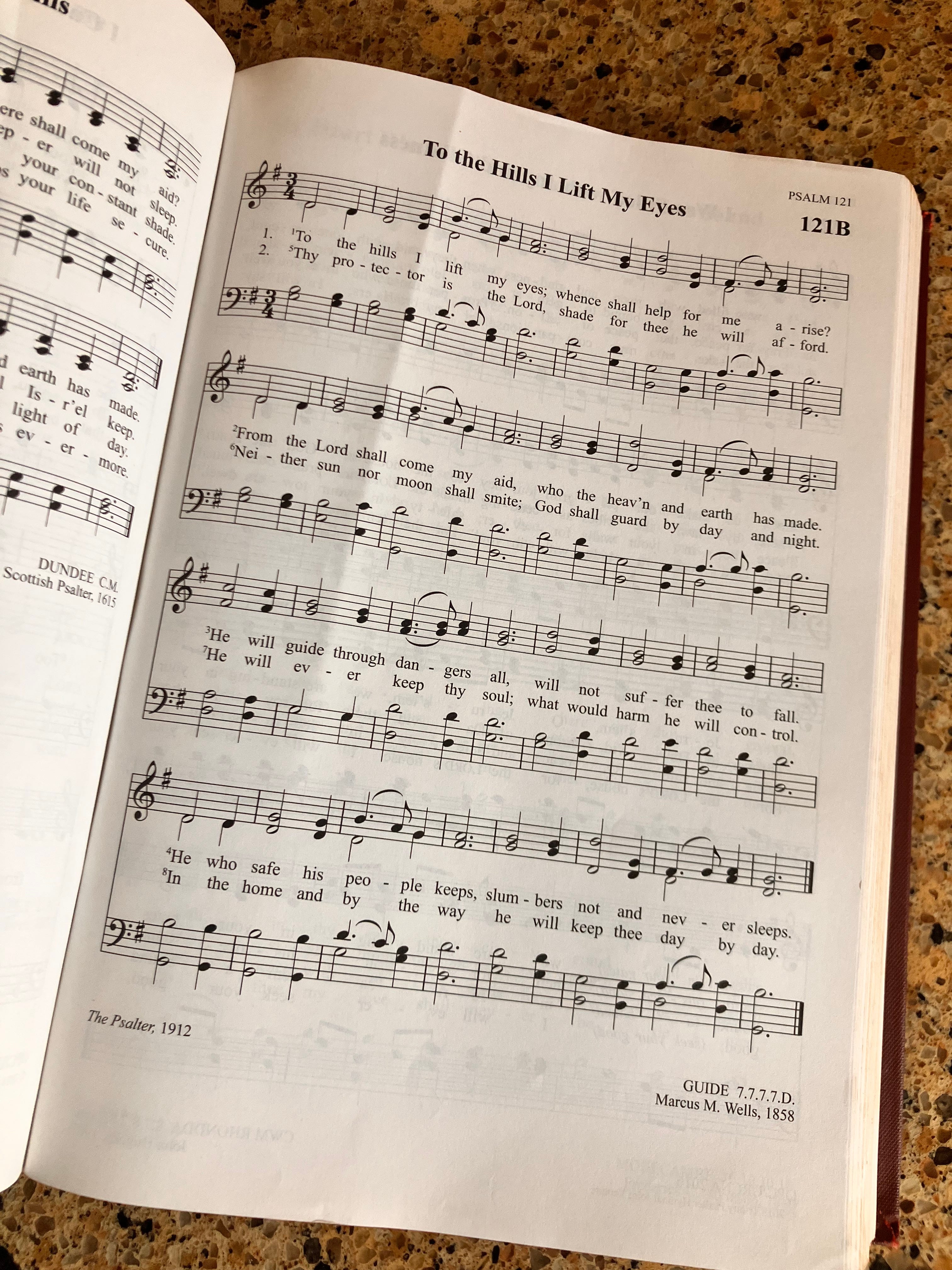
As I reflect back on what the broad category of “Bible Education” has looked like for us over the last 15 years, we have been through many seasons. The plans and decisions we’ve made have always been very dependent upon the season of life, the ages of our children, and the needs of our children. But one thing we have always strived for; however imperfectly, has been to worship the Lord together as a family daily. That looks like reading the Bible, praying, and singing. Neither my husband nor I grew up with that habit so we had a lot to learn in figuring out how to even remember to do it… and it doesn’t help that we’ve always lived a crazy life where each day is different from the next. But eventually we learned that we could be the most faithful over breakfast, and that is still the case.
In general, we gather over breakfast and we gather after supper. Sometimes we miss one or the other for various reasons. Sometimes our evening family worship has been just singing the doxology while putting people to bed. Sometimes it’s children begging to sing a seventh hymn (since my son started learning tenor we may even get all 4 parts now). We also tend to have an ideal, full version of the plan, but we’re not afraid to make adjustments as we go. This morning, we didn’t even sing. We read our Old Testament reading and narrated it. Daddy prayed and then we read our Psalm. When I post about recitation, I’ll share the full version of our current morning Bible time together.
Four Categories of Bible Education
Bible Reading and Narration
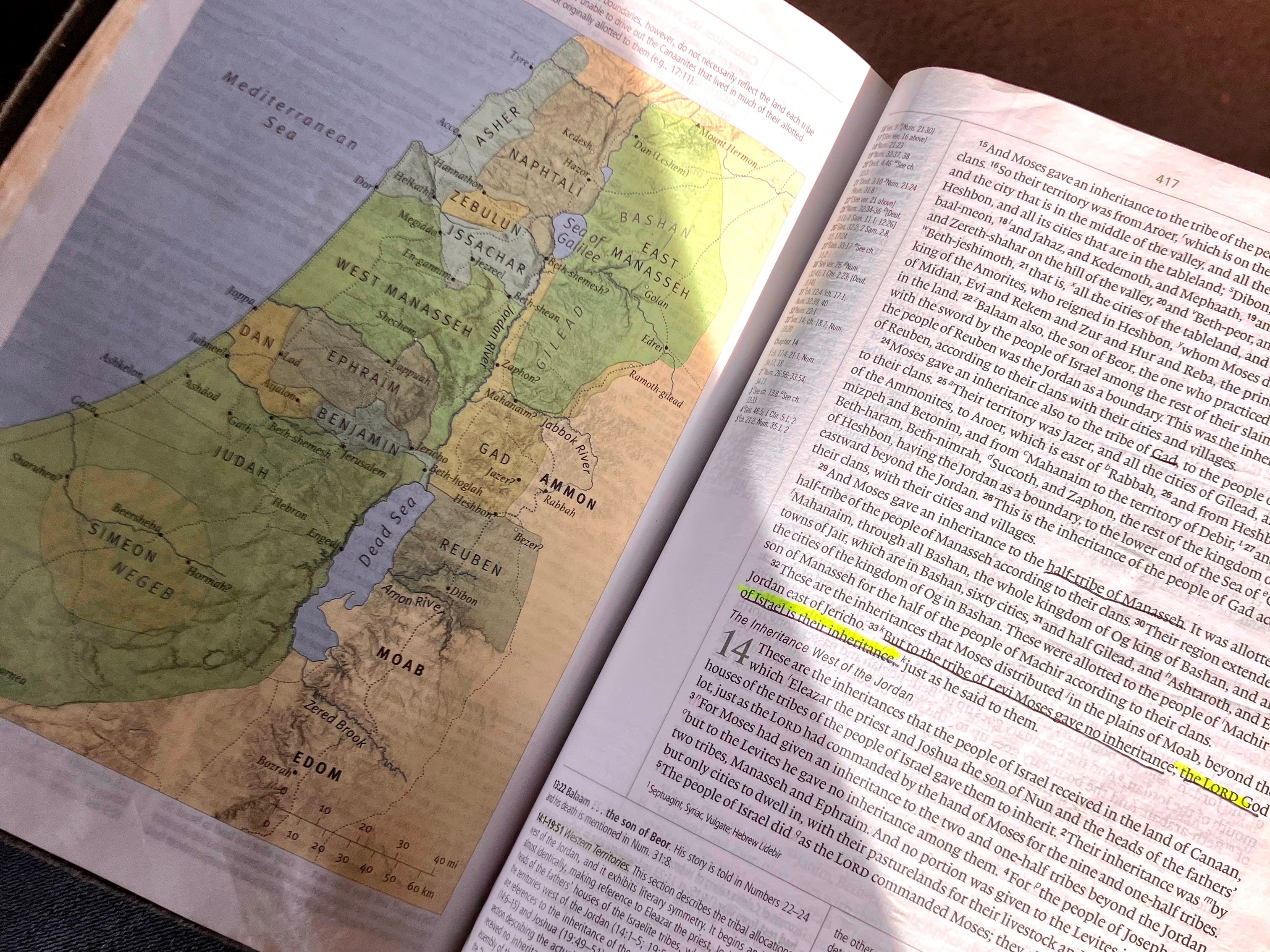
I have four categories that I’m working with for my children. First is reading the Bible itself. And the main thing here is that we read the Bible and we narrate it. This category also includes looking on the map for where things are taking place. We have always read the whole Bible with our whole family. And we have always asked our children to tell back what they heard, whether the time is defined as “school lessons” or “family worship.” But we keep in mind the ages of our children when we ask them to narrate. Charlotte Mason recommended that children up through at least age 9 really only read and narrate the narrative portions of the Bible, where there’s actually a story to tell. Even when our children were all younger, we still read the whole Bible. We just expected that - if it were not a very narrative passage - their telling back might be just a word or phrase which caught their attention. Now that we have olders and youngers, we expect the olders to narrate the more abstract things much more fully than the youngers.
Biblical Studies
The second category I call “Biblical Studies.” I really think of this as “Biblical Theology,” but it’s a little bit loosely considered. Biblical Theology is theology which is focused on particular books of the Bible or sections of the Bible. In other words, I’m often on the lookout for (and asking my husband for) books which elucidate the books of the Bible we’re planning to read each year. I read books for myself which will grow my own knowledge, and assign books to my children starting at about 7th grade for them to read and narrate along with their schoolbooks.
Spiritual Formation
The third category is “Spiritual Formation.” This category (again a bit loosely considered) is focused on living the Christian life. As my children have gotten older I’ve gotten more focused on choosing classic books in this category which were written during the period of history they’re also studying. This has been very fruitful and delightful. I don’t generally start assigning books in this category until about 7th grade, but as I plan the coming year, I do take a moment to consider how we’re doing in cultivating Christian disciplines. And I consider the particular needs of each of my children when looking at book choices across the curriculum. I’ll talk about missionary biographies when we get to discussing the Geography portion of our curriculum. And we cover church history along with our history studies. Both of those do quite a lot in this category as well.
Systematic Theology
And the fourth category is “Systematic Theology.” For my younger children, this is largely just memorizing the Westminster Shorter Catechism, though I have a couple books I usually go through with my younger children at some point. As they get older I have a couple books I like them to go through as well. And a bit of systematic theology also works it’s way into the Spiritual Formation and Biblical Theology categories.
And now for a little more of the nitty gritty in each category…
Bible Reading and Narration
For quite awhile, we had a plan for Bible reading in the morning and evening as a family, and then additionally my children did the AmblesideOnline Bible readings for their schoolyear. (And then my children are also expected to read the Bible and pray on their own each day. It’s the first thing on their checklist. They can do this however they like.) This was largely quite doable, but as I kept adding more children to formal school lessons and really wanted to do a good job rounding out their Bible knowledge with mapwork and commentary, I really needed to streamline things.
The chart you see below is what I came up with. I’m really just sharing it because I have people in my life who are always asking me to share what we’re doing. I love it and am very satisfied with it. Incidentally, if you want a family rotation which is even more true to what Charlotte Mason and the PNEU did, I just discovered that A Delectable Education has a free one. The PNEU did a lot of skipping through to particular Bible passages. We far prefer reading straight through books of the Bible with our children as we see great value in that. But the most important thing is that you read the Bible somehow with your children (and make getting through the whole thing a priority, hopefully at least a few times before they move out).
There were three goals with this chart. The first was to streamline my own planning and my own ability to guide my children intentionally through the Bible. I also wanted to still keep an order to working through whole books of the Bible in a somewhat logical manner. And finally, I wanted to lean toward saving the less narrative portions of Scripture for the older students. You’ll note that the first two goals took precedence over the final goal. My younger students are reading the whole Torah. We don’t skip laws or genealogies or land distributions. This is intentional and it hasn’t been a problem for us as we enjoy walking through all the connections to be made in these passages. They’re foundational for the rest of Scripture. If you haven’t yet fallen in love with Leviticus, stay tuned for my book recommendations in a future post.
Last year we did column 1 of the chart. That means we did the Torah & History (Genesis, Exodus, and Leviticus), the Gospel (Luke), the first half of Psalms and all of Proverbs together as a family in the morning during our family worship. So Monday, Wednesday, and Friday we do Old Testament and a Psalm (or part of a Psalm). And Tuesday and Thursday we do about two episodes of a Gospel reading and about half of a Proverb. The Psalms and Proverbs we really just read. The idea here is to just read these over and over again. The Old Testament and Gospels we narrate and discuss.
For the “New Testament” and “Prophets and Writings” readings, my older children read on their own and then narrated to their dad along with their Biblical Studies reading assignments. This year, we’ve been doing all of the above, but the second column - Year 2. Next year, I’m planning to find room in the schedule to do the “New Testament” and “Prophets and Writings” assignments with my 7th and 9th grade boys. I’m considering introducing them to a bit of Inductive Bible Study as well, but it will be a pretty light version of that.
In the evenings, my children also additionally get whatever portion of the Bible their dad is going through. He just finished going through a series of readings and liturgies which were focused on Lent and Easter. And now we’ve started going through the Psalms.
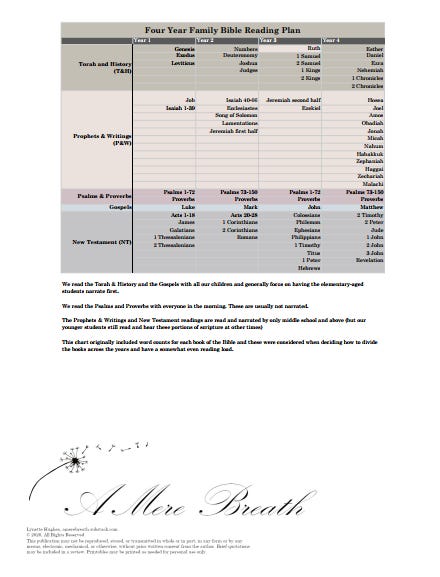

This post is getting long so I’m going to stop here and save the other categories for next time. I won’t leave without giving you my breakdowns for these Bible readings though. Here is how I scheduled them across the year. You’ll note that the schedule is only for 30 weeks. That’s because that’s how we schedule all of our schoolyear now. We inevitably get behind here and there for one reason or another. We also end up with weeks where we’re away from home or not all together and we do something simpler. We also usually do our Jesse tree readings for Advent and Christmas.
Parent Resources
Oh, and I almost forgot to leave you with a few resources I find helpful.
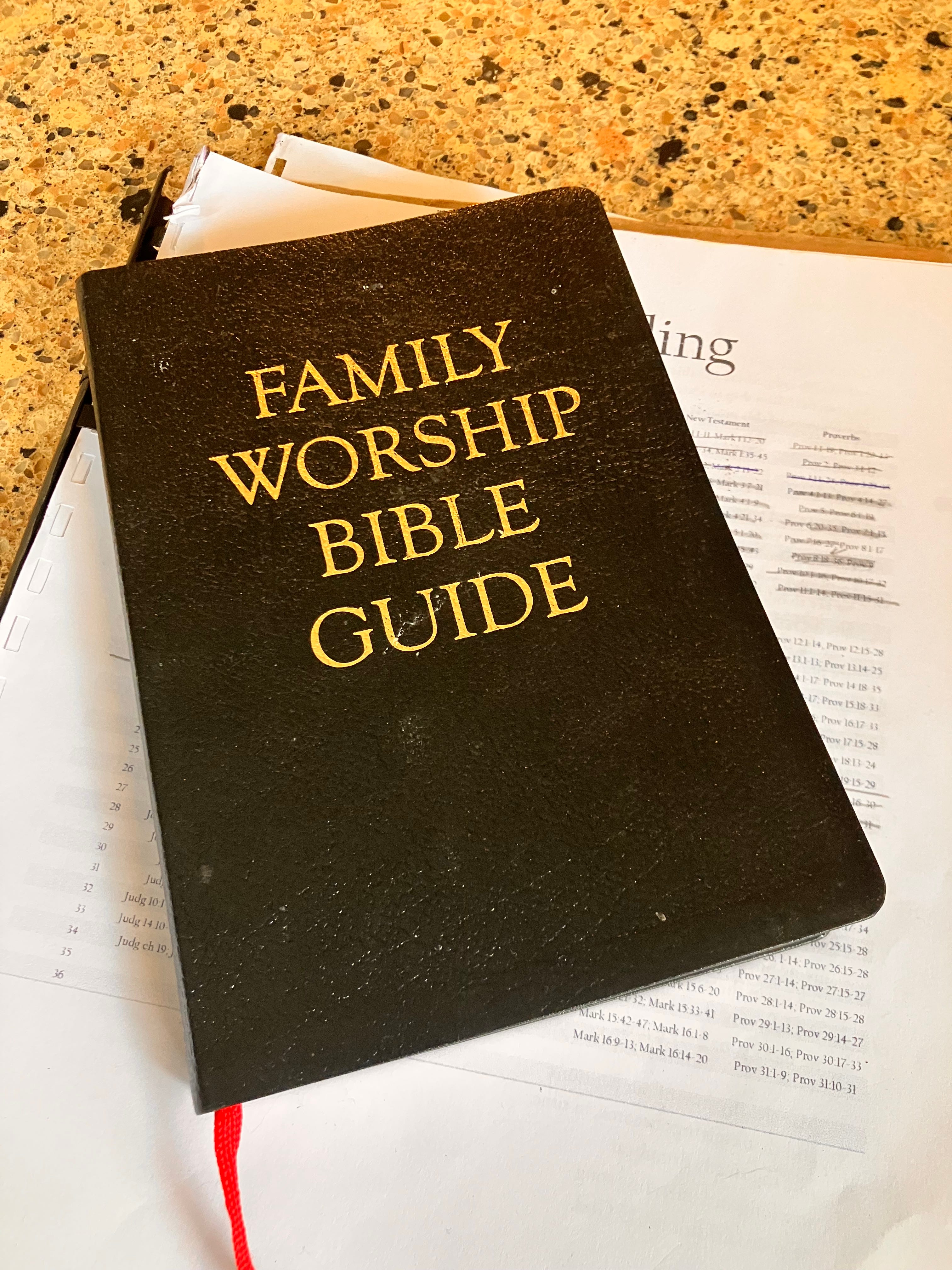
Family Worship Bible Guide - Little notes and possible application or discussion questions for every chapter of the Bible. I like to have this handy and just peek at it when I need a discussion thought. I don’t use it a ton as often narration and discussion just flow pretty naturally for us. I use it just like I use our Plutarch guides: I only ask questions or make comments from this if it makes sense in the moment we’re in. But it is often very helpful.
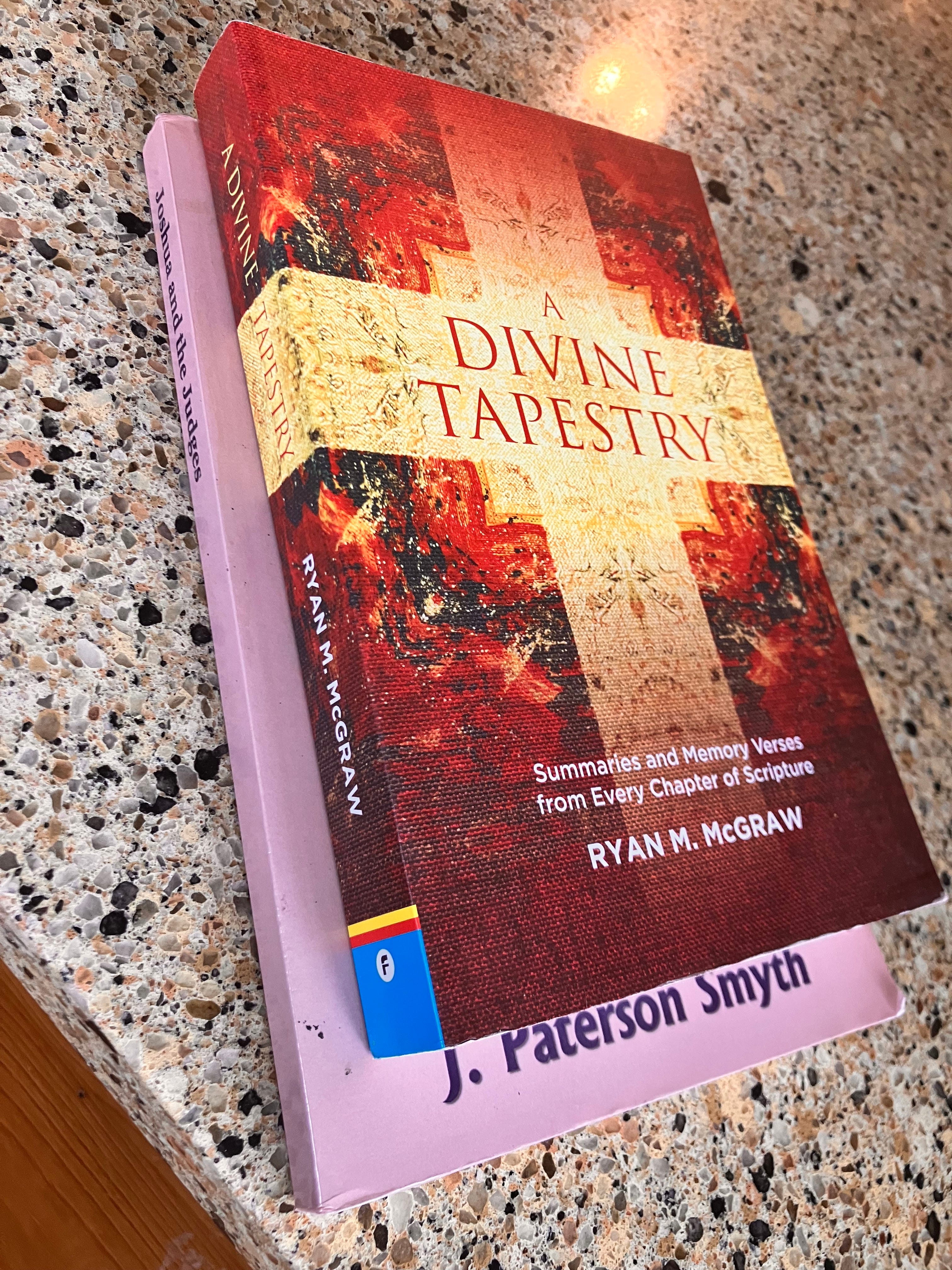
A Divine Tapestry by Ryan McGraw - This also goes through every chapter of the Bible. But this will be particularly helpful to you if you’re less familiar with the Bible - especially more obscure passages. Unsure what happened there? Every chapter is summarized in one sentence.
Paterson-Smyth commentaries - These are what Charlotte Mason used and recommended so they inevitably will come up in the CM world. I do like them, but with big caveats. There really is no other resource quite like them. Paterson-Smyth sets the scene for children in ways I’ve never seen anyone else do. It took me awhile to learn how to use them helpfully. What I do now is just read straight through everything he wrote on the book we’re starting, starring and marking things I might want to read or note to my children when we get to that passage. Then, I just keep it handy and glance at it when we’re doing our Bible reading. My big caveats are that I definitely don’t agree with everything he says and you definitely do need to read with discernment. The helpful passages are so helpful that I do love using them though. For Purchase. Free (scroll down to “The Bible for School and Home”)
IVP Bible Background Commentaries (New Testament here)- These are absolutely worth investing in and having on your shelf. When I have time, I look ahead for things which might be interesting to share. Mostly they’re just a reference resource, but when you or your children ever have questions about cultural or historical background to the text, these will be invaluable.
One more thing worth mentioning is that I have found it helpful to read directly from my physical Study Bible. For quite awhile I just pulled out my handy phone to read our Bible passage. But then I would always miss out on the helpful notes and MAPS which actually are much handier when in print in front of me. The ESV Study Bible is what I usually use. There are lots of maps right with the text in addition to the maps in the back.
Keep It Simple
The risk in sharing everything I’ve shared is that you might easily get overwhelmed in all the things. But please don’t forget that it’s actually so very very simple. Read the Bible with your children. Have them tell back what they heard. Don’t get caught up in asking questions which require them to read your mind. If there are important details they didn’t narrate, just narrate those yourself. Don’t fall into the Sunday School trap of getting all the right answers from one child and assuming your work is done. Don’t talk at them for so long their eyes glaze over. Don’t forget that Bible lessons aren’t really about creating little Pharisees who are good at Bible trivia. It’s really about opening the Word with your children every day, beholding His glory, glory as of the only One from the Father, full of grace and truth. Just do that, however imperfectly.
The method of teaching Scripture in the Parents’ Union School is so simple and will, I think, sound so easy, that it may seem dull. And yet there is no subject which takes so much preparation beforehand, no subject which is so hard to teach when the moment comes and I think no subiect much harder to talk about. - SCRIPTURE TEACHING. By H. E. WIX.
Some of the links above are affiliate links. This means that, at zero cost to you, I will earn an affiliate commission if you click through the link and finalize a purchase.